首发|THE FORMATION OF THE BRONZE AGE ALTAI MOUNTAINS INTERACTIVE……
发布时间:1479015900
来源:|0
作者:Shui Tao, Nanjing University
点击:1777
The Altai Mountains straddle China, Russia, Kazakhstan, and Mongolia: the southern foothills belong to China, the eastern part merges into the Sayan Mountains in Mongolia, the western part penetrates Kazakhstan, and the northern part extends into Siberia in Russia (fig.1). Historically, this region was the cradle of numerous nomadic tribes. Its Bronze Age cultures, in particular, have great significance in that they constituted the crux of Sino-Western cultural interaction.

Fig. 1 Map showing the Altai Mountains and the surrounding area[page]
I. Archaeological
Discoveries
In 1961, when the Chinese archaeologist Li Zheng investigated ancient tombs in the Altai region of Xinjiang, he came to discover the Keermuqi cemetery.[1] Then in 1963, the Xinjiang Museum excavated 32 tombs, which span a broad chronological range.[2] Tombs of the type of M16 are equipped with chambers made of rectangular stone slabs, but without any aboveground mound. One enclosure may contain one or multiple stone slab chambers, accompanied by one stone human figure outside of the enclosure. The occupant is laid supine or on one side, and offerings include distinctive ceramic wares, such as jars with spherical bases, jugs with flat bases, and stemmed cups, all of which are decorated with incised lines or punched dots. In addition, stone cups and stone figurines were found.
In 2003, the Buerjin County Administration of Cultural Relics acquired an olive-shaped ceramic jar, a ceramic stemmed-cup, and a ceramic bowl near Kuopaer in Woyimoke District, which were later discovered to have come from an early stone-slab chamber measuring 1.56m long, 1.14m wide, and 1.32m deep, and painted red inside.[3]
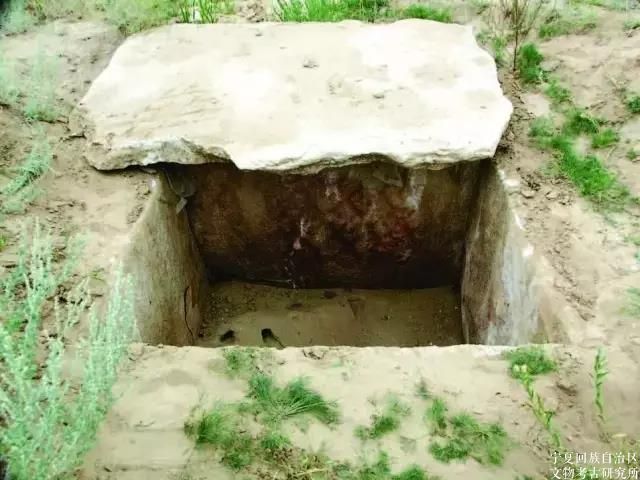
Fig. 2 Stone-slab chamber found at the Kuopaer cemetery
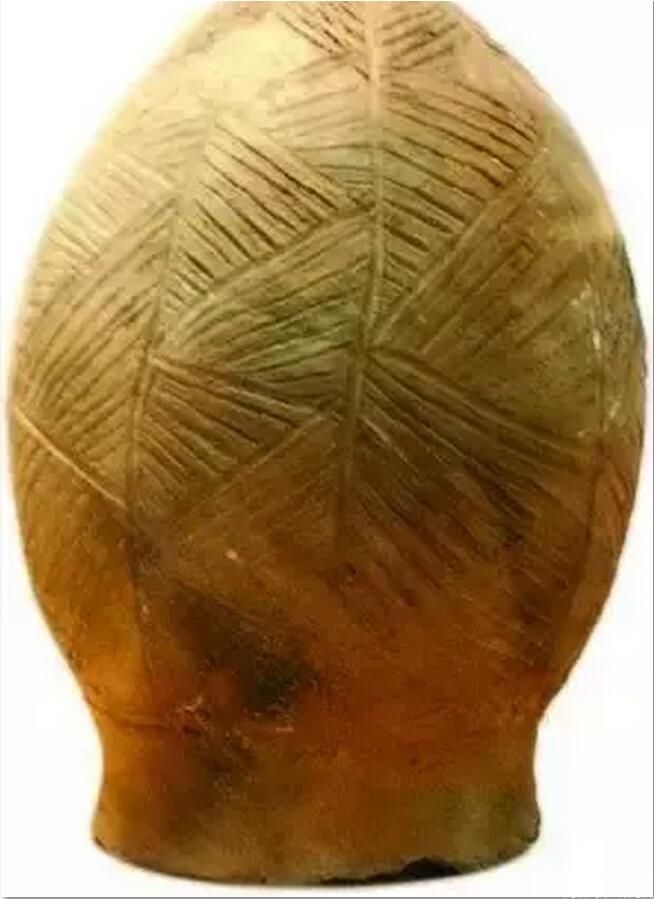
Fig. 3 Pottery found at the Kuopaer cemetery
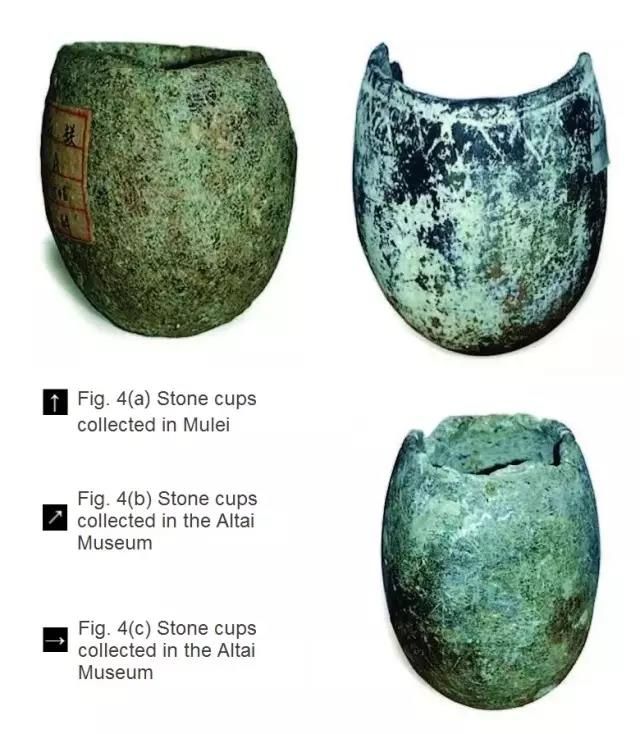
Similar ceramic wares have been discovered in Qitai County at the rim of the Zhungar (Zhungeer) Basin, which means that they are distributed all over northern Xinjiang.[4]
In 2010, a joint expedition of Sun Yat-sen University and the Xinjiang Institute of Cultural Relics and Archaeology discovered the stone-slab chamber tombs with stone human figures in Fuyun and Qinghe counties in eastern Altai, but they did not excavate any of them.[5]
In 2011-2012, the Xinjiang Institute of Cultural Relics and Archaeology excavated 36 tombs at the third cemetery at Bolati in Buerjin County, and among them some are belong to early cultures furnished with stone spherical-base barrel-shaped jars and olive-shaped jars.[6]
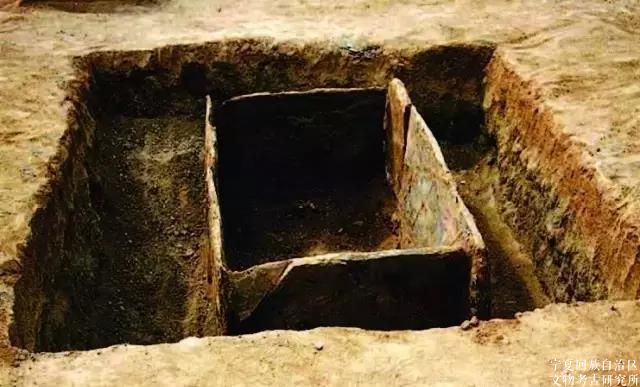
Fig. 5 Stone-slab chamber found at the third cemetery of Bolati
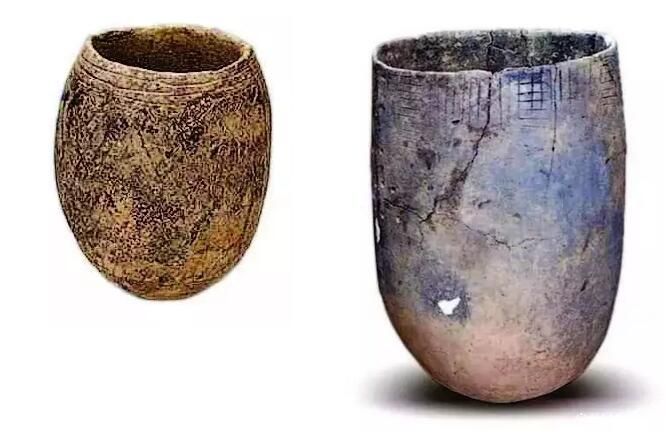
Fig. 6 Pottery found at the third cemetery of Bolati
In 2011, the institute excavated 61 tombs at the Dongtalede cemetery in Habahe County. Some of them are stone-slab chamber tombs with stone-pile mounds. Although many tombs of this cemetery were robbed prior to the excavation, a great number of gold foil ornaments, motifs of which are mostly realistic animals, such as boars, snow leopards, deer, and lambs, were uncovered. According to the excavators, the earliest ones date to the ninth century BCE.[7]
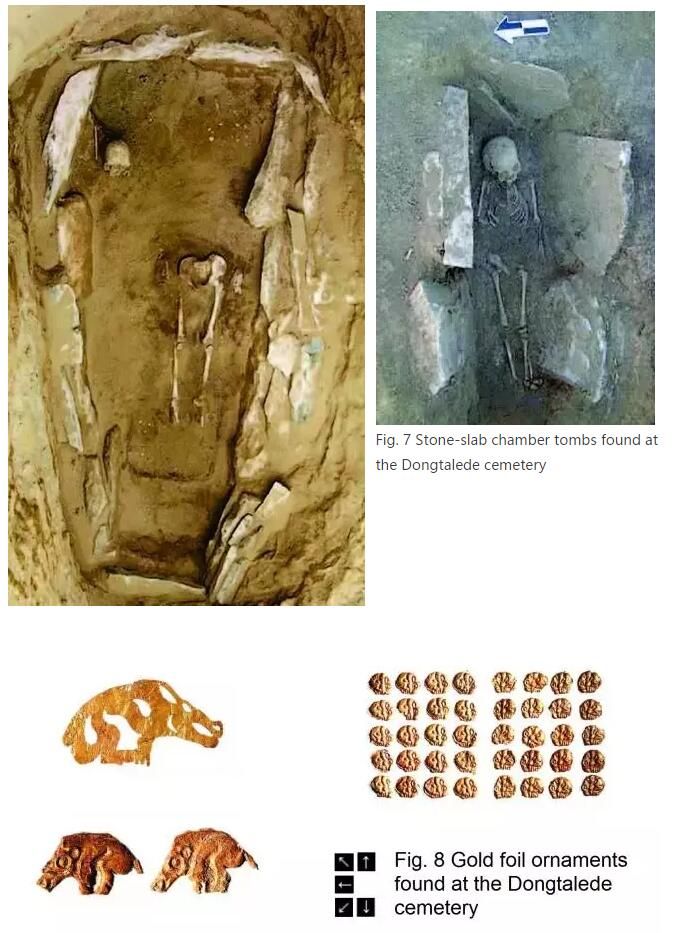
In 2010, the Institute excavated 30 tombs at the Shankou Power Station cemetery in Buerjin County. It is reported that tombs M16-19, which are furnished with stone-slab chambers and stone enclosures, are dated to the Bronze Age; the other stone-slab chamber tombs date to the fifth century BCE.[8]
In 2011, the Institute excavated 100 tombs at the Aletengyemu Reservoir cemetery in Yumin County. Some of them are stone-slab chambers and shaft-pit earthen tombs of the early period. Based on a comparative study of the olive-shaped pottery wares from Tomb M74, they are dated to around 2000 BCE.[9]
The data of the third nation-wide survey in Xinjiang, published in recent years, recorded the discovery of dozens of cemeteries that feature this type of stone-slab chamber tomb in northern Xinjiang.
On the Russian side of the Altai Mountains, Russian scholars began to investigate ancient cemeteries in the nineteenth century. In 1856, V. V. Radlov excavated two frozen tombs at Berel’ and Katanda in the intermontane valleys of the Altai, and found many horses, harnesses, and silk and leather artifacts accompanying burials.[10]
In 1862-1869, V. V. Radlov carried out a number of surveys and excavations in the Minusinsk, Altai, Semirech’e, and Yili Valleys. On this basis, he divided the archaeological materials of southern Siberia into four periods: Bronze Age, Ancient Iron Age, New Iron Age, and Late Iron Age.[11]
From the early twentieth century on, Russian archaeologists S. A. Teploukhov, S. V. Kiselev, S. I. Rudenko, and M. P. Griaznov carried out a number of excavations in the Altai region.[12] In his Ancient History of Southern Siberia, S. V. Kiselev organized the early archaeological materials from the Minusinsk Basin and Altai region into the Afanas’evo, Andronovo, Karasuk, and Tagar cultures, and discussed their characteristics and areas of distribution, which is important for understanding the early cultures of the Altai region.[13] Later, S. I. Rudenko’s excavation of the Pazyryk cemetery and M. P. Griaznov’s excavation of the Arzhan cemetery provided additional materials for understanding the cultural development in the first millennium BCE in the Altai region and enabled the identification of the Uyuk culture in Tuva.[14]
Up till now, the study of early cultures in the Altai region has become a hot topic among the international community of scholars.[page]
II. Mutual Interactions
When we compare the cultures that the Russian archaeologists S. V. Kiselev, S. I. Rudenko, and M. P. Griaznov determined using materials from the southern foothills of the Altai Mountains of Xinjiang, we find that the Afanas’evo culture of 2000 BCE, which is distributed in southern Siberia, spread southward over the Altai Mountains into northern Xinjiang. If we pursue the subject earlier, we see that elements of the earlier Yamnaya culture from the Urals area also arrived in Xinjiang.[15] These are the earliest Bronze Age materials then known in northern Xinjiang. Tomb M16 of the Keermuqi cemetery is typical of the later phase of this culture, which is now named Chemurchek culture. To date it is purported to have spread as far as Qitai County on the south-eastern rim of the Zhungeer Basin.[16] Some scholars posit that this culture moved further southward into the Tarim Basin, and profoundly impacted the formation of Xiaohe culture in the Lob-Nor area and the Xintala Phase in southern Tianshan.[17]
In a later period, Andronovo culture spread to Tacheng, Buerjin, and Habahe counties in northern Xinjiang; the earliest discoveries of this culture are the Adunqiaolu cemetery and settlement in Wenquan County, Xinjiang.[18] It was dispersed widely to the Pamir Plateau in southern Xinjiang,[19] and the Yili Valley in western Xinjiang.[20] It is believed that these sites in Xinjiang constitute the later local variant of Andronovo culture.[21]
Karasuk culture was widely distributed in the Minusinsk Basin but had relatively little influence on northern Xinjiang. To date some isolated materials of this culture have been discovered in the Altai area, and are named the “Kuxi Phase”. [22] However, in the eastern Eurasian steppe, Karasuk culture spread all the way to the east of Lake Baikal and the Bronze Age Yinxu site in China.[23]One may consider that Karasuk culture was mainly distributed in the areas to the north of the Altai Mountains.
Within the first millennium BCE, a few isolated items of Tagar culture, which is widely distributed in the Minusinsk Basin, appeared in Xinjiang. Only a shaft-hole axe has been found at the Yanghai cemetery in Shanshan County in the Turfan Basin. The main distribution of Tagar culture is again located to the north and east of the Altai Mountains.[24]
The Pazyryk culture of the Altai Mountains made a profound impact upon the ancient cultures of northern Xinjiang. To date a sizeable number of gold foil objects with animal images have been discovered in Habahe County. In addition, at the Yanghai cemetery in the Turfan Basin[25] and the Zhagunluke cemetery[26] in Qiemo County on the rim of the Tarim Basin, a large number of animal-style wooden and woolen objects have been found. It appears that the Scythian animal-style art spread from west to east to the Altai Mountains, and further to Xinjiang along with the movements of nomadic peoples.[27][page]
III. Several Ideas
The formation of the Altai
Mountains interactive zone
To date, there are few clues regarding the Neolithic cultures in Xinjiang, and we are not sure if Neolithic cultures from both sides of the Altai Mountains share any characteristics, but at least from 2000 BCE on, the dispersal of Afanas’evo culture around the Altai Mountains created an interactive zone. It could be that the eastern movement of Yamnaya culture brought about a series of migration of cultures and peoples, so that Afanas’evo culture and the subsequent Okunevo culture in the Minusinsk Basin crossed the Altai Mountains and entered the north and northwest of Xinjiang, as far as Qitai County. Anthropological research has told us that the migrants belong to the Caucasian proto-European group. They share physical characteristics with the Xiaohe culture of 2000 BCE in the Tarim Basin, but we are not certain whether they have any cultural and consanguineous connection with the latter.
Impact of the Altai Mountains
interactive zone
As stated above, the early peoples, who comprised mainly the proto-European race, lived primarily in the north and northwest of Xinjiang; we are not certain whether they migrated into the Tarim Basin. In other words, the interactive zone is limited to the areas around the Zhungar Basin.
Andronovo culture spread widely into the north, northwest, and southwest of Xinjiang, far beyond the Zhungar Basin, and possibly even into the south-western rim of the Tarim Basin; the Liushui cemetery on the upper Khotan River provides similar materials.[28] Because this culture varies greatly across the broad territory of its distribution, scholars have identified regional variants of this culture. The culture appears to have come from the Ural Mountains; its population expanded eastward to Xinjiang along with horse-drawn chariots, mining and smelting technologies. In this process the Altai Mountains were an important transmission path.
The rise of the Scythian culture was an important event on the Eurasian steppe that had a profound impact. Pazyryk cemetery in the Altai Mountains and the Arzhan kurgans in Tuva identify the Altai Mountains as an important area of the eastward dispersal of Scythian culture. The animal-style art has been discovered throughout Xinjiang; we have reason to assume that it spread from the Altai Mountains. The culture of the Pazyryk cemetery may have derived directly from the Scythian culture of the northern Black Sea region.
It appears that the Altai Mountains interactive zone played a major role in early Sino-Western cultural interaction. We believe that future archaeological work will provide fresh data and a fresh understanding of the above question.
Postscript: This paper was written for the International Conference “Research Methods of Key Issues of Eurasian Archaeology” in September 2013. The Chinese text was first translated by Prof. Zhang Liangren into English, which was then translated into Russian, and published in the proceedings of the conference. In this version, which was submitted to honor the tenth anniversary of the death of Prof. Tsou Heng, most illustrations were deleted and a few references were added.[page]
NOTES:
[1] Li Zheng, “A preliminary report on the stone-man tombs in the Altai region”, Wenwu 1962:7-8.
[2] Institute of Archaeology, Xinjiang Academy of Social Sciences, “A preliminary report on the Ke’ermuqi tombs in Xinjiang”, Wenwu 1981:1.
[3] Zhang Yuzhong, “Olive-shaped pottery jars unearthed in Buerjin County, Xinjiang”, Wenwu 2007:1.
[4] Qitai Cultural Museum, “Stone Age settlements and cemeteries in Qitai County, Xinjiang”, Kaoguxue Jikan 2: pp. 22-24.
[5] Sun Yat-sen University and Xinjiang Institute of Cultural Relics and Archaeology, “Ancient cultural remains of the eastern Altai Mountains”, Xinjiang Wenwu 2011:1, pp. 1-62.
[6] Yu Jianjun, “The third cemetery at Bolati in Buerjin County, Xinjiang”, China Cultural Relics Weekly, 25 March 2013.
[7] Xinjiang Institute of Cultural Relics and Archaeology, “A preliminary report on the Dongtalede cemetery in Habahe County”, Xinjiang Wenwu 2013:1.
[8] Xinjiang Institute of Cultural Relics and Archaeology, “A preliminary report on the Shankou Water Plant in Buerjin County”, Xinjiang Wenwu 2013:1.
[9] Xinjiang Institute of Cultural Relics and Archaeology, “Excavation report on the Aletengyemu cemetery in Yumin County”, Xinjiang Wenwu 2013:3-4.
[10] A. A. Zakharov and Iu. S. Khudiakov, “Arkheologicheskie isyskaniia na levoberezh’e Katuni v 1984 godu”, Arkheologicheskie issledovaniia na Katuni, Novosibirsk, 1990, pp. 30-43.
[11] V. V. Radlov, Iz Sibiri (stranitsy dnevnika), Moscow, 1989.
[12] È. B. Vadetskaia, Arkheologicheskie pamiatniki v stepiakh srednego Eniseia, Leningrad: Izdatel’stvo Nauka, 1986.
[13] S. V. Kiselev, Ancient History of Southern Siberia, 2 volumes, Institute of Ethnography, Xinjiang Academy of Social Sciences, 1981.
[14] Sergei I. Rudenko, Frozen Tombs of Siberia: The Pazyryk Burials of Iron-Age Horsemen, translated by M. W. Tompson, Berkeley and Los Angeles: University of California Press, 1970, Fig.146; M. P. Griaznov, Arzhan, Leningrad, 1980.
[15] Ludmila Koryakova and Andrej V. Epimakhov, The Urals and Western Siberia in the Bronze and Iron Ages, New York: Cambridge University Press, 2007, pp. 45-57.
[16] Qitai Cultural Museum, “Stone Age settlements and cemeteries in Qitai County, Xinjiang”, Kaoguxue Jikan 2: 22-24
[17] Lin Meicun, “Tuohuoluo ren de qiyuan yu qianxi”, Xinjiang Wenwu 2002: 3-4, pp. 69-82.
[18] Cong Dexin, “The early Bronze Age settlement and cemetery at Adunqiaolu in Xinjiang”, http://www.kaogu.net.cn/, 27 December 2012; Cong Dexin et al., “The discovery of lineage tombs at the Adunqiaolu cemetery in Wenquan County, Xinjiang”, Zhongguo Wenwubao, 30 January 2015, p. 5.
[19] Xinjiang Wenwu Kaogu Yanjiusuo ed., Xinjiang Xiabandi Mudi, Wenwu Chubanshe, 2012.
[20] Xinjiang Wenwu Kaogu Yanjiusuo, “Nilekexian Tangbalesayi mudi kaogu fajue baogao”, Xinjiang Wenwu 2012:2, pp.4-20; Xinjiang Wenwu Kaogu Yanjiusuo, “Tekesixian Kuokesuxi 2 hao muqun kaogu fajue jianbao”, Xinjiang Wenwu 2012:2, pp. 51-57.
[21] Jia Mingwei, Wu Xinhua, Ailisen Baici, “Zhungaer diqu de shiqian kaogu yanjiu”, Xinjiang Wenwu 2008:1-2, pp. 35-54; Han Jianye, Xinjiang de Qingtongshidai he Zaoqi Tieqishidai, Wenwu Chubanshe, 2007, p. 51.
[22] Shao Huiqiu, “Shilun Xinjiang Aletai diqu de lianglei qingtong wenhua”, Xiyu Yanjiu 2008: 4, pp. 59-65.
[23] C. B. Jixieliefu, “Sulian jingnei qingtong wenhua yu Zhongguo shangwenhua de guanxi”, Kaogu 1960:2, pp. 51-53.
[24] Tulufan Bowuguan ed., Tulufan Bowuguan, Xinjiang Meishu Sheying Chubanshe, 1992, p. 47.
[25] Turfan Regional Bureau of Cultural Relics, “Cultural relics from the Yanghai cemetery in Shanshan County”, Xinjiang Wenwu 1998:3.
[26] Xinjiang Museum et al., “The first cemetery of Zhagunluke in Qiemo County, Xinjiang”, Xinjiang Wenwu 1998:4.
[27] Shui Tao, “Lun Xinjiang diqu faxian de zaoqi qima minzu wenhua yicun”, Zhongguo Xibei Diqu Qingtong Shidai Kaogu Lunji, Kexue Chubanshe, 2001, pp. 88-89.
[28] Wu Xinhua et al., “Excavation of the Liushui cemetery in the Kunlun Mountains in Xinjiang”, Major Discoveries of China, Wenwu Chubanshe, 2006.[page]
作者简介:
水涛,生于1960年8月,毕业于北京大学,博士学位。现任南京大学考古学专业教授、博士生导师。中国社会科学院古代文明研究中心客座研究员,江苏省考古学会常务理事。
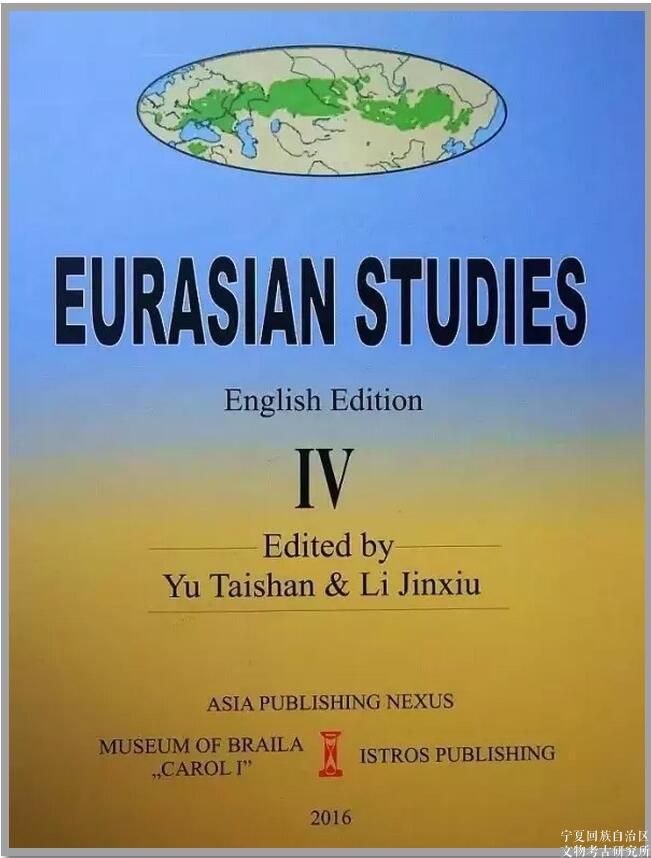
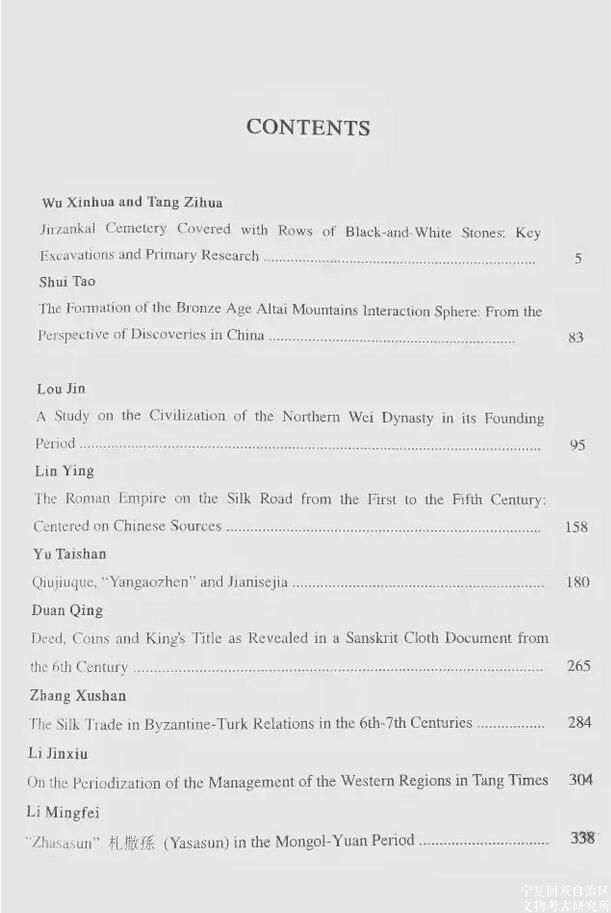
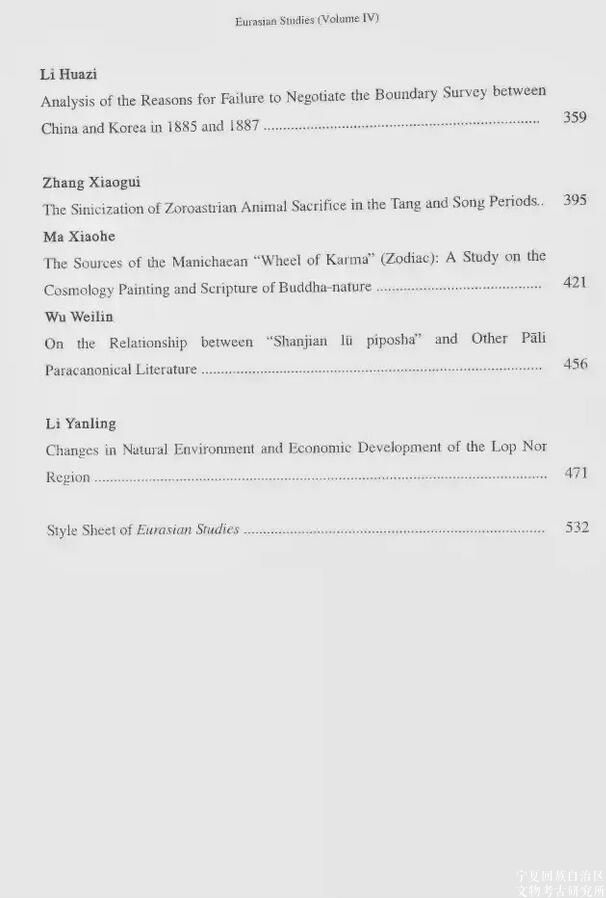
小编记:《Eurasian Studies》是社科院历史所中外关系研究室的刊物,对外发行,全英文。余太山,李锦绣主编。本次小编承蒙水涛先生的允诺在此首发,在此表示感谢。原文出处如下:
ShuiTao,The Formation of the Bronze Age Altai Mountains Interaction Sphere:From the Perspective of Discoveries in China,Eurasian Studies,( Volume IV ),2016,p.83-94。
CONTENTS